

What you'll find here
-
A self-guided walking trail with 8 QR-coded stops, where scanning each point reveals insights into wildlife, history, identification tips, and seasonal highlights - encouraging closer exploration of the Heath.
-
An overview of four key habitats - heathland, woodland, grassland, and wetlands - each supporting distinct wildlife and forming a diverse, interconnected ecosystem.

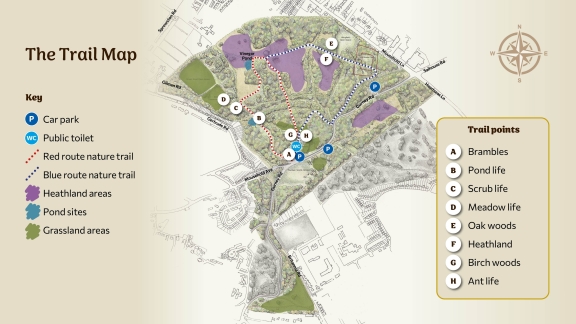
Explore the trail points
The Biodiversity Trail includes eight marked points across the Heath. Each is marked by a post - you can visit them in any order. The map above shows the trail route and waypoints.

Explore the Heath's key habitats

Woodland and scrub

Heathland

Grassland
Grassland blends into heathland in some parts of Mousehold, and into woodland and scrub in others – it all depends on soils and land-use history. Soils in old brick-pit areas tend to be clayey, so giving rise to a ‘neutral grassland’ type where acidity is balanced with lime content. Elsewhere, soils developed on sands and gravels – most of Mousehold – tend to be acidic, giving rise to lime-poor ‘acid grassland’ or heathland type habitat. Different plants and animals are associated with each.

Ponds
‘Vinegar Pond’ and smaller ‘Mustard Pond’ are two water bodies on the Heath. They are underlain by water-retentive clay layers but tend to shrink in summer. However, they are a valuable resource for birds, frogs and other animals in this otherwise waterless area.
Why biodiversity is important
Biodiversity underpins the health of our ecosystems, supports climate resilience, and enriches our daily lives. In Norwich, protecting biodiversity is central to creating a city where nature can thrive alongside people.
The city’s Biodiversity Strategy sets out a bold vision to halt species decline, enhance habitats, and build a connected nature recovery network. Everyone has a role to play, whether through volunteering, wildlife recording, or simply walking lightly on the land.


